cran-tastic
December 15, 2009 § 3 Comments
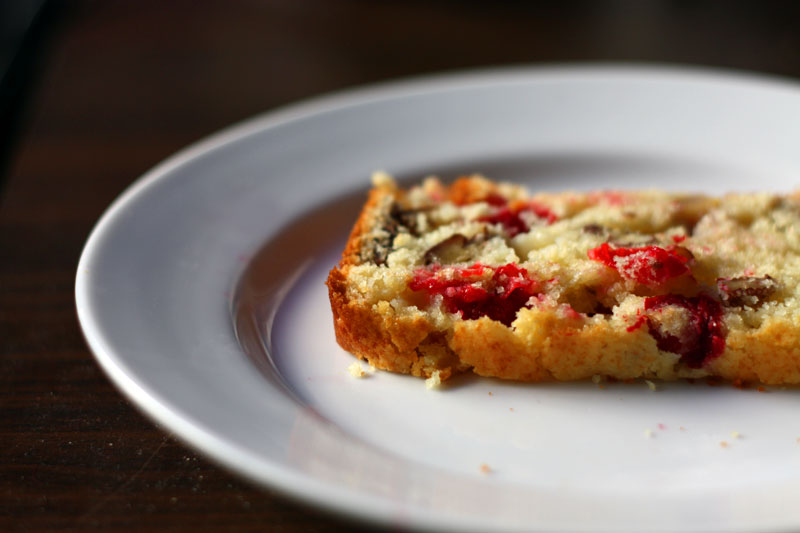
I currently have approximately a bajillion cranberries left over from overenthusiastic Thanksgiving grocery shopping. I know they keep well for a while, but I think I’m starting to push my luck, so a series of cranberry items have begun to appear in my house. The first was this apple-cranberry pecan loaf, which I have to say is quite a respectable use of cranberries.
I got the recipe from my Magnolia bakery cookbook, which I’ve actually never used before. Immediately after I bought it I started reading terrible reviews, and was generally discouraged from making anything from it. It’s always so easy to find recipes online that are pre-approved by hundred of reviewers that my cookbooks have actually started to feel risky. But I’ve noticed that this is somewhat silly of me, so I turned to Magnolia to help with the cranberry glut.
This loaf actually turned out really well, I love the tart bursts of cranberries along with the apples and pecans. The cake was really tender and moist, but I thought it could have used a smidgeon more flavour. I might try adding a splash of vanilla to the batter next time, and it might also help to toast the pecans first… anyhow, many variations are possible, but this was also good as written. In fact, my roommate thought I was crazy for insisting it needed modification. So I’d say it was a success!
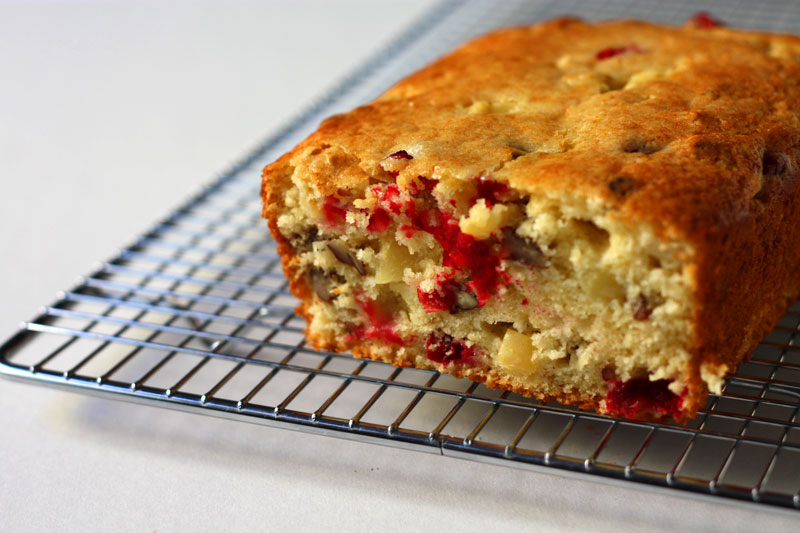
Apple-Cranberry Pecan Loaf – adapted from The Magnolia Bakery Cookbook
Preheat oven to 350°F. Grease a 9×5 loaf pan.
In a large bowl, sift together flour, sugar, baking powder, and salt. Make a well in the centre and add liquid ingredients. Stir until just combined, being careful not to overmix. Gently stir in apples, cranberries, and nuts. Pour into prepared pan and bake until a cake tester comes out with moist crumbs, about 50-60 minutes. Don’t overbake this or it will be dry!
Note: I can’t vouch for this as I haven’t tried it, but next time I plan on adding a teaspoon of vanilla along with the wet ingredients.
accidental rolls
December 8, 2009 § 6 Comments
It’s been a long time since I had a proper baking disaster, and I suppose I was overdue. I unfortunately seem prone to the snowball effect when it comes to accidents: one small mistake rattles me, and then everything goes downhill from there. It’s like that time I was driving, and then someone honked at me, and then I got nervous and failed to notice that I was backing directly into a parked car. Happens to everyone, right? No?
At any rate, the snowball hit my kitchen last night when I was seized with a last-minute urge to make rolls. Despite my constant baking, I’m actually pretty inexperienced when it comes to bread, and usually the very idea of bread-baking intimidates me. But it somehow seemed reasonable given that I was making soup – you can’t eat soup without bread! It’s just not right.
The problems began when I wasted two packages of yeast by assuming they were defective, when in reality I had forgotten to add the sugar (the essential step to make your mixture frothy). Then I realized I was out of whole-wheat flour and had to substitute all-purpose. I then realized I was also out of eggs and had to run to the store – and by the time I returned, I forgot I was making a half recipe and tossed in twice as many eggs as I was supposed to. Oops.
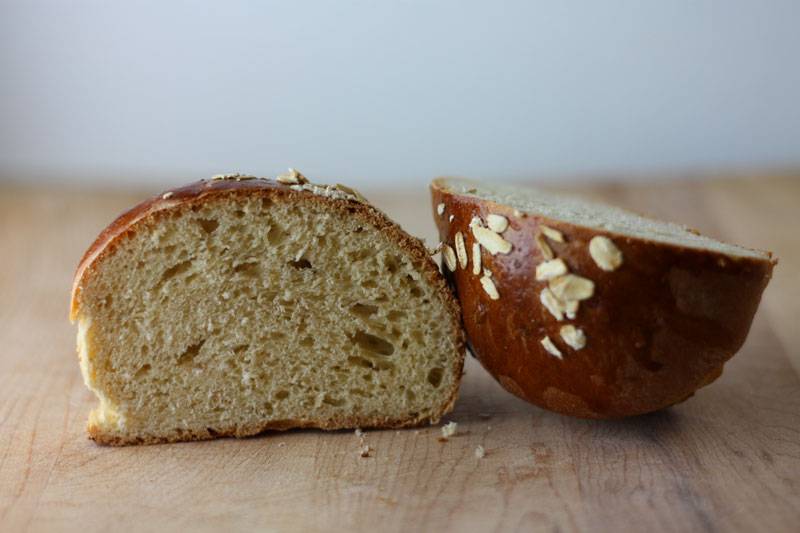
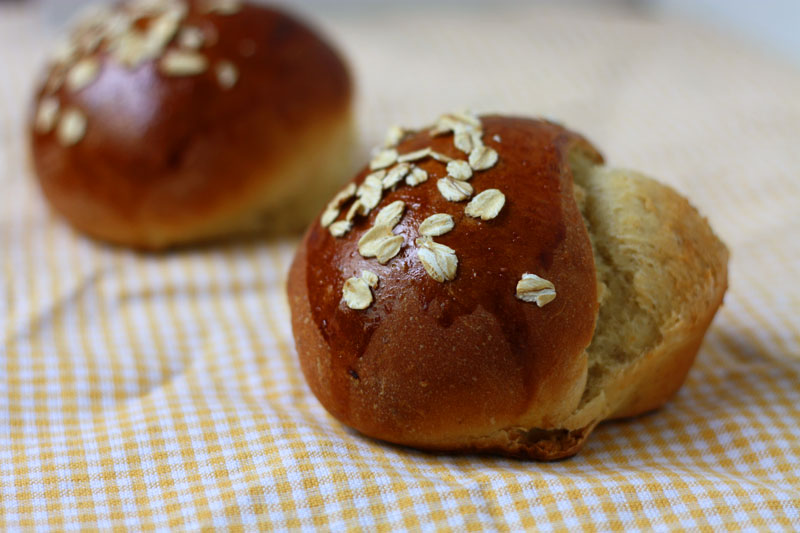
At this point I was quite convinced that these were going to be the eggiest, ickiest rolls ever. But I baked them anyhow, just to make sure – and they were yummy! Fairly eggy, to be sure. But that can be a good thing. Compared to regular rolls, the were richer, denser, and somehow also more tender. They weren’t really hearty the way they were intended to be, but the chewiness imbued by far too much egg was actually pretty good. Definitely better when still still warm, but what isn’t? Anyhow, I’ve concluded that if I can be this incompetent and still make decent bread, perhaps it isn’t something to be scared of after all.
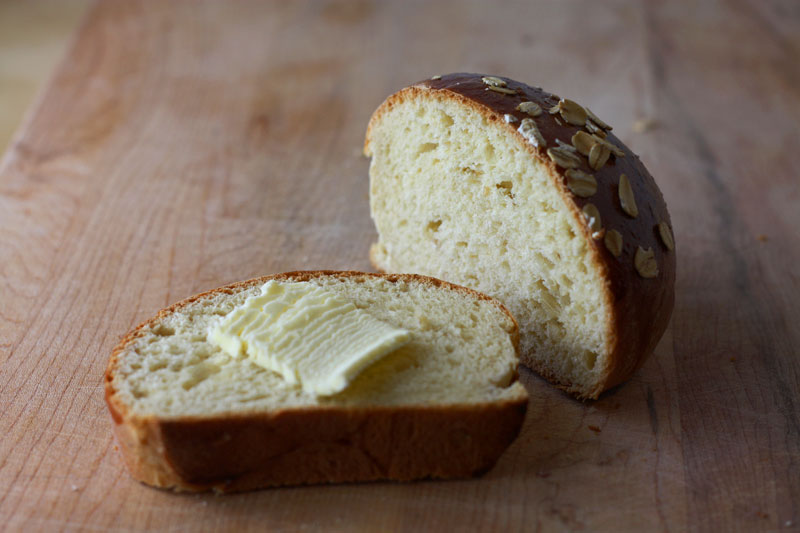
laura’s accidental oatmeal rolls
Yield: 1 loaf or 6 rolls
- 1/4 cup brown sugar, divided
- 1/4 cup warm water
- 1 package active dry yeast (1 tablespoon)
- 1/2 cup plus 1/8 cup boiling water
- 1/2 cup quick-cooking rolled oats (not instant)
- 3 tablespoons softened butter
- 3/4 teaspoon salt
- 2 eggs, lightly beaten
- 3 cups flour (approximately)
Topping:
- 1 egg, lightly beaten
- 1/4 cup quick-cooking rolled oats
In small bowl, dissolve 1 teaspoon of the sugar in warm water. Sprinkle in yeast and let stand for ten minutes, or until frothy. If your yeast doesn’t froth, it probably won’t work and you should start over with a fresh pack.
In a large bowl, stir together remaining sugar, boiliing water, oats, butter, and salt. Let cool to lukewarm. Stir in yeast and eggs. With electric mixer, beat in 1 1/2 cups flour. With wooden spoon, stir in enough flour to make soft dough.
Turn out onto lightly floured surface. Knead for 8 to 10 minutes or until smooth and elastic. Place in greased bowl, turning to grease all over. Cover with plastic wrap and let rise in warm draft-free place for about 1 1/2 hours.
Gently punch down dough. If making rolls, divide into 6 portions and shape each into a ball. Place on greased baking sheet (or in greased loaf pan if making loaf). Cover and let rise for 45 minutes.
Preheat oven to 375°F. Brush tops with egg and sprinkle with rolled oats. Bake until rolls sound hollow when tapped on bottom, about 25-30 minutes. Let cool briefly on racks; serve warm.
a foray into gluten-free
December 3, 2009 § 9 Comments
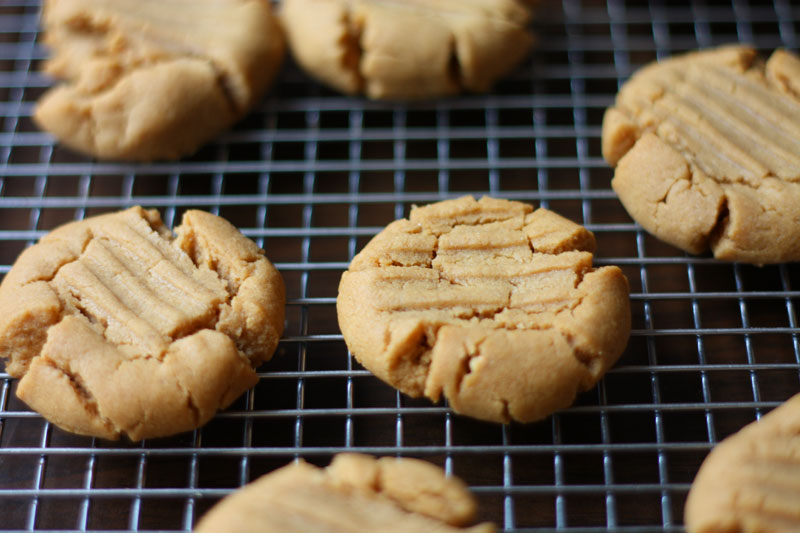
Oh flour, how I love thee, let me count the ways! 1: cake. 2: cookies. 3: warm bread. And so on, I think you get the idea.
But in fact, flour is very unkind to a small segment of the population. Specifically, it creates much unpleasantness for those people with Celiac disease, which comes with pretty tricky food restrictions. The gluten-free diet rules out anything with flour, as well as several other foods (beer! ack!), but it would be unacceptably tragic not to be able to eat baked goods. And so, after a few discussions with a friend who has Celiac, I set my sights on baking something delicious and gluten-free. Then it took me at least a month to get around to it.

The main obstacle was that every recipe seemed to require four different flours which I didn’t yet own, and were pretty expensive. In the end, I went in completely the opposite direction: flourless! Highly delicious and definitely no gluten. My nearly flourless chocolate cake would have been easy to adapt, but I wanted something portable that I could take to share with others. The answer, then, was flourless peanut butter cookies: I didn’t know they existed, but I’m so glad I do now.
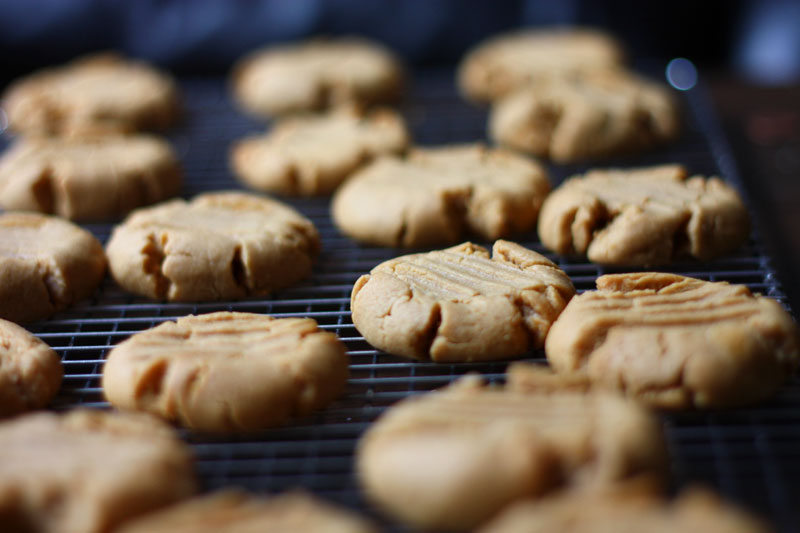
I can’t pretend that these are exactly the same as regular peanut butter cookies: the lack of flour makes them a bit prone to falling apart, and the texture is different. But they’re still soft and peanut buttery and full of flavour – my friend said this was the best peanut butter cookie she’d had since her diagnosis. So I pronounce my first attempt at gluten-free a success, and might even go buy some fancy flours soon. Those who know me won’t be surprised that I didn’t take much convincing.
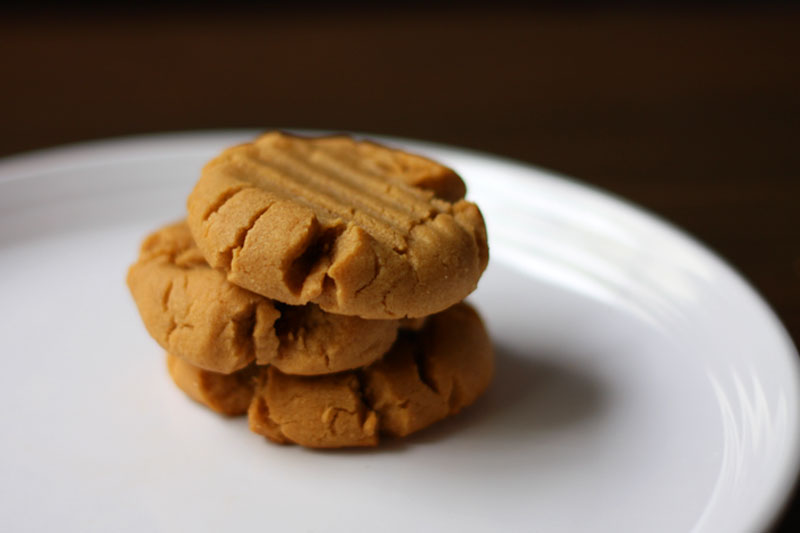
Peanut butter cookies: from Joy the baker
- 1 cup peanut butter (if you use a natural brand, you should probably add salt)
- 1/2 cup sugar
- 1/2 cup brown sugar
- 1 egg
- 1 teaspoon baking soda
Preheat oven to 350.
With hand mixer, beat peanut butter with sugars until well combined, about 2 minutes. Add egg and baking soda and beat for another 2 minutes. Roll dough into walnut-sized balls (it’ll be crumbly, just squeeze it lots), place on baking sheet and press down with fork. Bake until lightly browned, about 10 minutes.
two thanksgivings
November 29, 2009 § 3 Comments
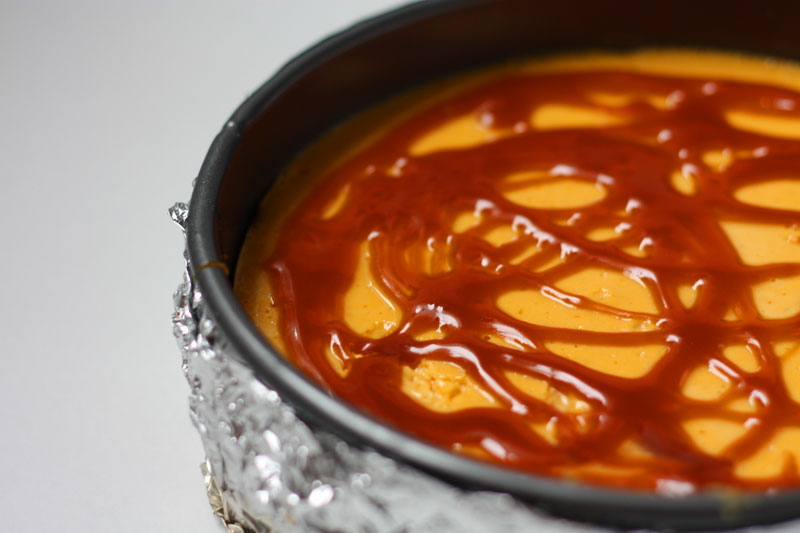
Although this is my second year in the US, I’d never actually been to a traditional American Thanksgiving dinner. Glutton that I am, I made up for it this year by attending two dinners. One of my friends celebrated Thanksgiving on Friday, so on both days I got to revel in unreasonable amounts of food. They were both really fantastic: the first was with a friend’s family, and it was very cozy and traditional; the second was a lovely and relaxed evening with friends. Both events also featured an alarmingly huge turkey, which I gather is the main point.
Thanksgiving seemed like the perfect opportunity to try out the pumpkin cheesecake recipe I recently found, but two dinners presented an even better possibility: to compare two separate recipes. Of course, this also meant separately making and baking two cheesecakes, and yes I was up until three in the morning getting it all done – but it was so very much worth it.
The two recipes were the Pure Pumpkin Cheesecake from Rose Beranbaum’s cookbook, and the Spiced Pumpkin Cheesecake from Bon Appétit. Which was better? Um, I’m going with the cop-out answer: they were both really delicious, and quite different from each other. What they had in common was that they were surprisingly light for cheesecake, which was good given that they came at the end of an incredibly heavy meal. In fact, one friend who announced that he was too full for dessert somehow managed to eat three pieces (I might also have accomplished this feat. Two nights in a row.) Another friend announced that it made his cheeks tingle – I chose to take that as a compliment.
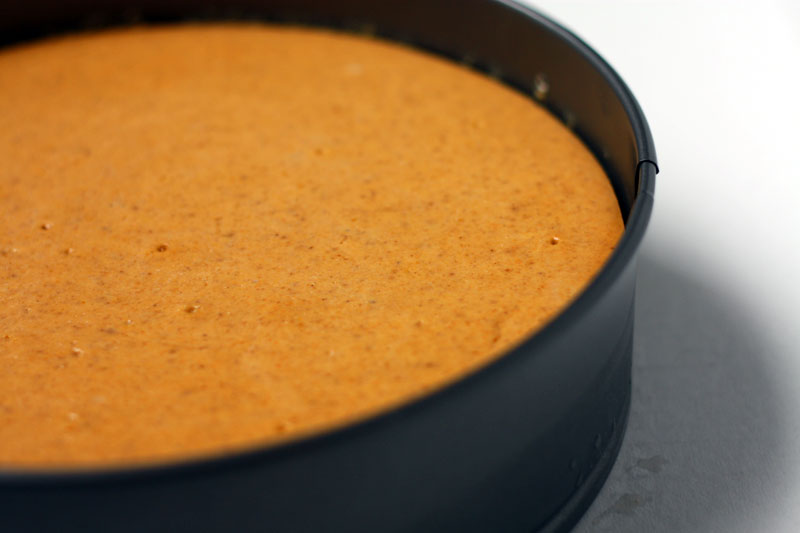
Rose’s cheesecake was incredibly creamy and smooth, and the pumpkin flavour came through really clearly. The caramel topping was also amazing, and it was worth the fact that I burned it to my pot on the first try (caramel is scary). The crust was a bit of a disappointment though, as it was pretty mushy. Next time I would try prebaking it for 10 minutes or so, to get it a little crispier.
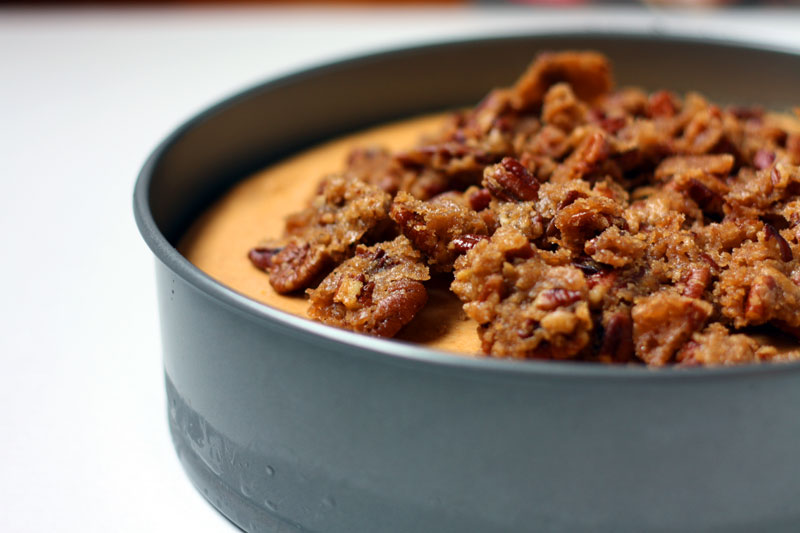
The BA cheesecake was also fantastic: it has twice as much cream cheese, so the filling was much tangier. The spices and cream cheese were a great complement to the pumpkin, which was much more subtle in this rendition. The filling was more reminiscent of pumpkin pie, and was sturdier than Rose’s version, although still light and creamy. I topped it with a pecan praline, but the sugariness was a bit over the top, so next time I’d stick with a caramel drizzle.
The verdict? They’re both great, and you should pick the filling based on your own tastes (creamy and pumpkiny vs tangy and spiced). With either crust I would make sure to prebake it, and the caramel topping would be great with both. Also, be warned that if you eat three pieces you might feel somewhat ill afterwards.
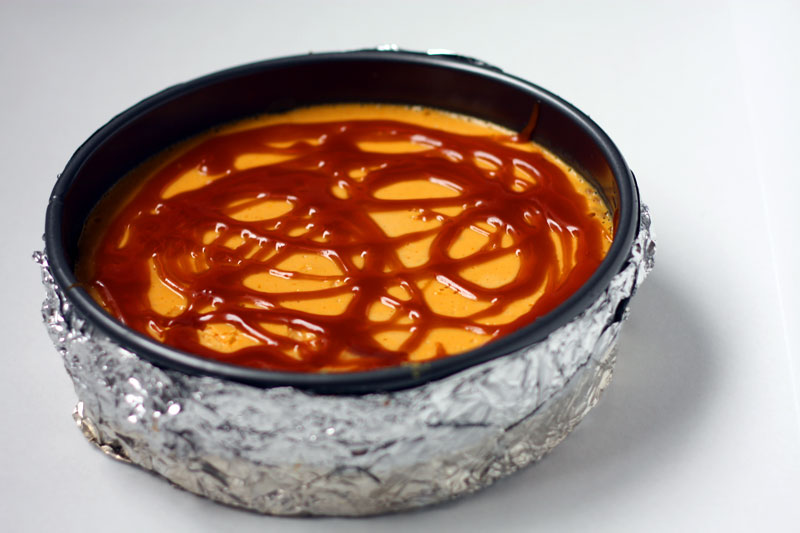
Pure Pumpkin Cheesecake – adapted from Rose’s Heavenly Cakes
This recipe turned out great, but there were several disasters along the way. I blithely ignored the fact that you needed a food processor for this recipe, and tried to do it with my hand mixer. That did not work out. I managed to solve it by using my immersion blender instead, but note that this recipe really needs a serious blade to come out right. I also found the cheesecake needed a longer bake time than she specified (what’s listed here is what I used), so gauge according to your own oven’s behaviour.
Crust:
- 1/2 cup pecan halves
- 1 cup gingersnap crumbs
- 1 tablespoon
- 2 pinches salt
- 4 tablespoons (1/2 stick) unsalted butter, melted
Filling:
- 1 cup pumpkin
- 1 cup turbinado sugar
- 2 cups heavy cream
- 1 pound (2 8-ounce packages) cream cheese
- 2 eggs
- 2 egg yolks
Caramel:
- 1/2 cup sugar
- 1/2 tablespoon corn syrup
- 2 tablespoons water
- 1/4 cup heavy cream, heated
- 1 tablespoon butter
- 1/2 teaspoon vanilla
Preheat oven to 350°F. Wrap a 9-inch springform pan in tin foil to prevent water leakage.
For crust: Toast pecans until browned and aromatic, about 7 minutes. Put in food processor along with gingersnap crumbs, sugar, and salt, and process until fine crumbs, about 20 seconds. Add melted butter and pulse just until incorporated. Press crumbs into bottom of pan and 1 1/2 inches up sides (it helps to use a measuring cup). Although the recipe didn’t specify this, at this point I would prebake the crust for about 8-10 minutes, until golden.
For filling: Stir together pumpkin and sugar in small pot, and stir constantly on medium heat until sputtering. Reduce heat to low and cook until thick and shiny, about 3 to 5 minutes. Scrape into food processor and process for 1 minute.
Add heavy cream with motor running. Add cream cheese and process until smooth, about 30 seconds. Add eggs and yolks and process until just incorporated. Scrape filling into crust.
Put springform pan in larger roasting pan and fill with 1 inch of hot water. Bake for 55 minutes, then turn off oven without opening and let the cake cool until middle is softly set, about 1 hour. Cool on wire rack, then chill overnight in refrigerator.
For caramel:
One tip: be super, super attentive. I would ignore all instructions about temperatures, because while you’re fiddling with the thermometer your caramel has already burnt. This I know from experience.
In medium pot, preferably nonstick, stir together sugar, corn syrup, and water. Stir constantly over medium heat until sugar dissolves and syrup is bubbling. Stop stirring completely and let moisture boil until deep amber, lowering the heat when it starts to change colour. Remove from heat and carefully pour in cream. Scrape up solid bits and return to low heat, stirring gently for 1 minute. Remove from heat and stir in butter. Pour into a glass measuring cup and let cool slightly. Mix in vanilla and let cool to room temperature. Scoop into piping bag and swirl all over cheesecake.
Spiced Pumpkin Cheesecake – from Bon Appétit
Crust
- 9 whole graham crackers (about 4 ounces), broken
- 1/4 cup sugar
- 1 teaspoon ground cinnamon
- 1/4 cup (1/2 stick) butter, melted
Filling
- 4 8-ounce packages cream cheese, room temperature
- 1 1/2 cups sugar
- 3 large eggs
- 1 15-ounce can pure pumpkin
- 1 cup whipping cream
- 2 teaspoons vanilla extract
- 2 teaspoons ground cinnamon
- 1 teaspoon ground ginger
- 1/2 teaspoon ground nutmeg
- 1/2 teaspoon ground allspice
- 1/4 teaspoon ground cloves
Praline
- 1/2 cup (packed) golden brown sugar
- 3 tablespoons unsalted butter
- 3/4 cup coarsely chopped pecans
For crust:
Preheat oven to 350°F. Wrap double layer of heavy-duty foil around outside of 10-inch-diameter springform pan. Combine graham crackers, sugar, and cinnamon in processor. Blend until graham crackers are very finely ground. Drizzle butter over. Pulse until crumbs begin to stick together. Press crumbs onto bottom (not sides) of springform pan. Bake until crust is slightly golden, about 10 minutes. Transfer to rack and cool while preparing filling. Maintain oven temperature.
For filling:
Using electric mixer, beat cream cheese and sugar in large bowl until smooth and fluffy. Beat in eggs 1 at a time. Add pumpkin and remaining 7 ingredients. Beat just until blended. Pour filling into prepared crust. Place springform pan in large roasting pan. Add enough water to come halfway up sides of springform pan.
Bake cheesecake until slightly puffed and softly set and top is golden, about 1 1/2 hours. Transfer springform pan to rack and cool. Cover and refrigerate cake overnight.
For praline:
Preheat oven to 325°F. Line baking sheet with foil. Stir sugar and butter in heavy medium saucepan over medium heat until sugar melts and mixture comes to boil; boil 1 minute without stirring. Mix in pecans. Spread mixture on prepared baking sheet. Bake until sugar syrup bubbles vigorously, about 8 minutes. Cool praline completely. Break into pieces. (Can be made 1 day ahead. Store airtight.)
Using knife, cut around sides of pan to loosen cake. Release pan sides. Sprinkle praline over, leaving 1-inch plain border at edge. Cut cheesecake into wedges and serve.
caponata
November 25, 2009 § 1 Comment
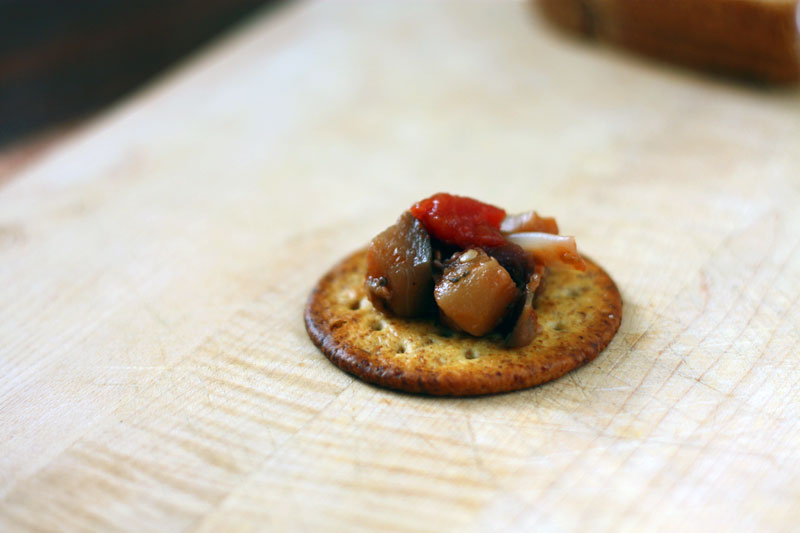
I was minding my own business in the grocery store, attempting to stock up on vast quantities of chocolate and heavy cream, when the eggplants called to me. They were purple and shiny and cuter than any vegetable should be. Naturally, I immediately purchased one, and it was only once I got home that two things occurred to me: one, I had never bought an eggplant before! What a momentous occasion. And two, I had absolutely no idea what to do with it.
Luckily, the internet came to the rescue, as it generally does. Several sites mentioned ‘caponata’, which I’d never heard of, but sounded delicious: tomatoes, onions, and eggplant all sautéed together into a warm and flavourful stew-like spread. And as an extra selling point, the name sounds all exotic even though I secretly know it’s really easy. Now of course, it would have been better if I had gotten my lazy self out the door to buy fresh basil, but it is cold and I am a wimp. So I made do with dried and it was yummy all the same. I was also mildly intimidated by the massive pile of eggplant chunks that this unassuming vegetable yielded, but it turns out they all cook down and it really does turn into a more reasonable quantity of food.
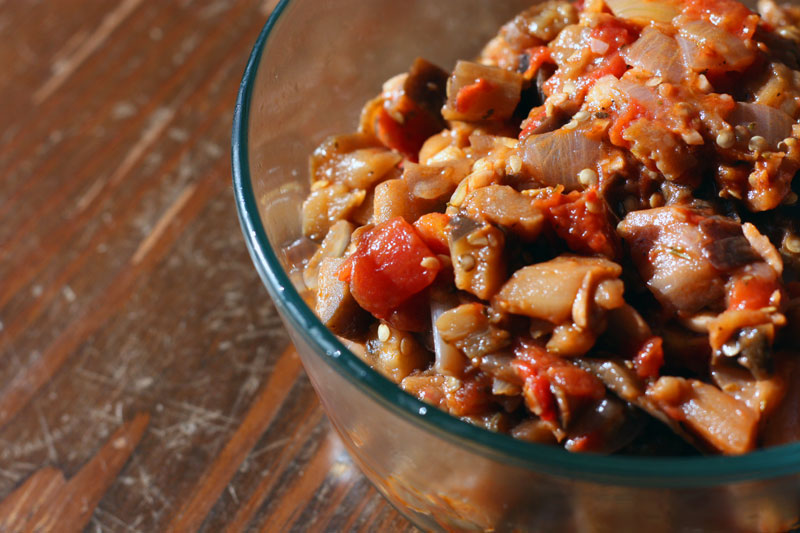
As for what to do with it: I spooned this while still piping hot onto toast, but it would be even better on baguette with goat cheese, and I suspect it would make a good pasta topping as well, maybe with extra tomatoes and sprinkled with Parmesan and pine nuts. Basically the idea is: caponata + carbs = some kind of delicious.
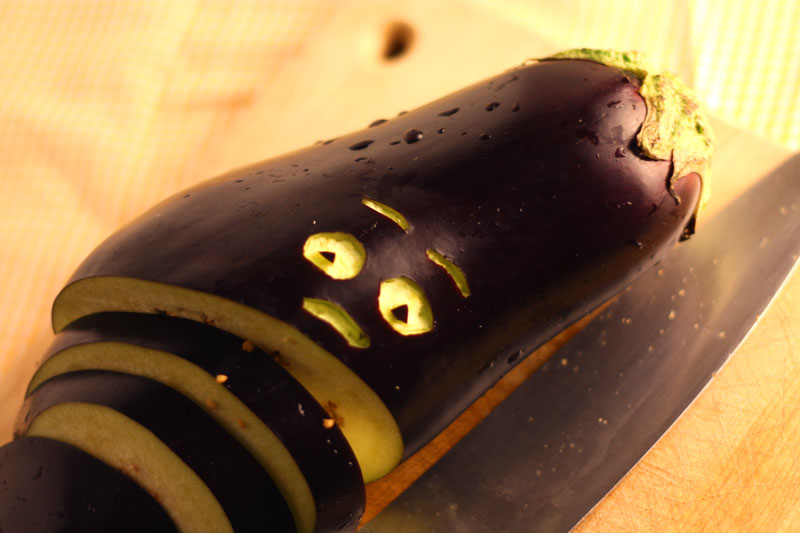
Please excuse the ugly photos – I was in a rush and just snapped a couple. To compensate: I present this picture of what happens when you leave eggplants alone with my roommate.
Caponata – adapted from Epicurious
- 4 tablespoons olive oil
- 1 1 1/2-pound eggplant, unpeeled, cut into 1/2-inch cubes
- 1 medium onion, diced
- 4 large garlic cloves, minced
- 1 14 1/2-ounce can diced tomatoes
- 3 tablespoons red wine vinegar
- 1/3 cup chopped fresh basil or 3/4 teaspoon dried (fresh is probably much better)
- Salt and pepper to taste
Heat oil in heavy large pot over medium heat. Add eggplant, and onion, and sauté 10 minutes. Add garlic and continue to sauté until eggplant is soft and brown, about 5 more minutes. Add diced tomatoes with juice, then red wine vinegar – if using dried basil, add here as well. Cover and simmer until eggplant and onion are very tender, stirring occasionally, about 12 minutes. Season caponata to taste with salt and pepper. Mix in fresh basil, if using. Transfer caponata to serving bowl. Serve warm, at room temperature, or cold.
Notes: This recipe takes a lot of salt, I needed to add quite a bit. The vinegar flavour was also fairly pronounced, which I enjoyed, but if you’re not big vinegar fan you might want to start with less.
 one cake two cake