salty scotchies
June 19, 2010 § 7 Comments
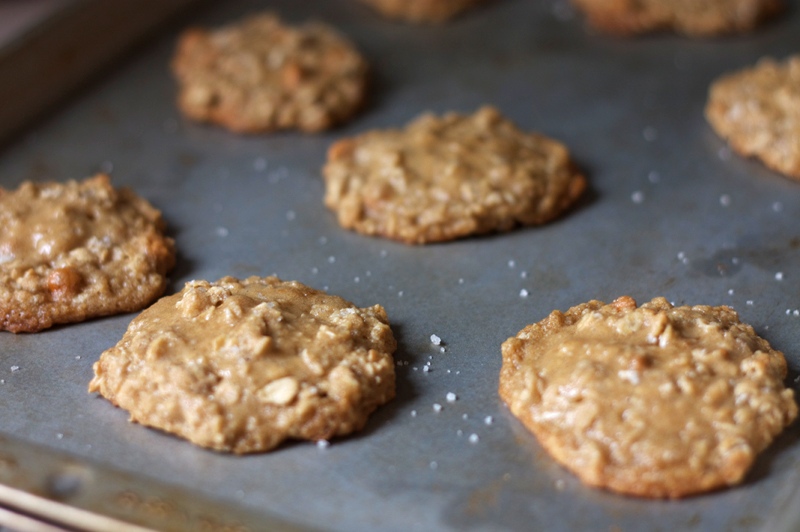
I feel slightly silly when I change one minor thing about a recipe, and then have to write that I’ve “adapted” it. Switching brown sugar for white, adjusting a baking temperature – these are hardly revolutionary concepts. But yesterday I made a recipe literally a million times better (literally!) with one of these tiny changes, which can be summarized in one word: salt. I know, I’m so brilliant.
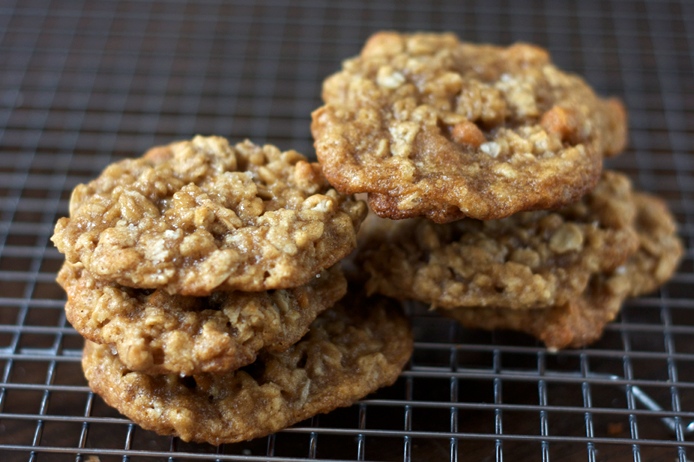
I had a bag of butterscotch chips lying around, which I had never tasted before let alone baked with, so I decided to start with the recipe on the back of the bag. Oatmeal cookies with butterscotch chips sounded like a pretty decent combination. This recipe was incredibly easy, but when I tasted the dough I already knew there was going to be a problem. I guess I’m new to butterscotch, and wasn’t prepared for the cloyingly sweet taste. But after doubling the salt, and then sprinkling with fleur de sel (taking this back-of-the-bag recipe decidedly upmarket), the result was incredible: sweet but salty, nutty from the oats, kinda sticky, generally delicious.
Oatmeal Scotchies – adapted from the back of the Nestle bag
Be warned – these cookies are fairly hideous. People at my barbecue thought they were veggie burgers (to be fair, it was dark out!). But so easy, and so delicious!
-
1 1/4 cups all-purpose flour
1 teaspoon baking soda
1 teaspoon salt
1/2 teaspoon ground cinnamon
1 cup (2 sticks) butter, softened
3/4 cup granulated sugar
3/4 cup packed brown sugar
2 large eggs
1 teaspoon vanilla extract
3 cups quick or old-fashioned oats
1 2/3 cups (11-oz package) butterscotch chips
Fleur de sel or sea salt, for sprinkling (if you only have table salt, or if you’re salt-shy, just leave this step out)
Preheat oven to 375° F. Line baking sheets with parchment paper.
Combine flour, baking soda, salt and cinnamon in small bowl. In a large bowl, beat butter, granulated sugar, and brown sugar until fluffy. Beat in eggs and vanilla extract. Gradually beat in flour mixture. Stir in oats and butterscotch chips. Refrigerate for 30 minutes or longer (optional, but helps the cookies keep their shape).
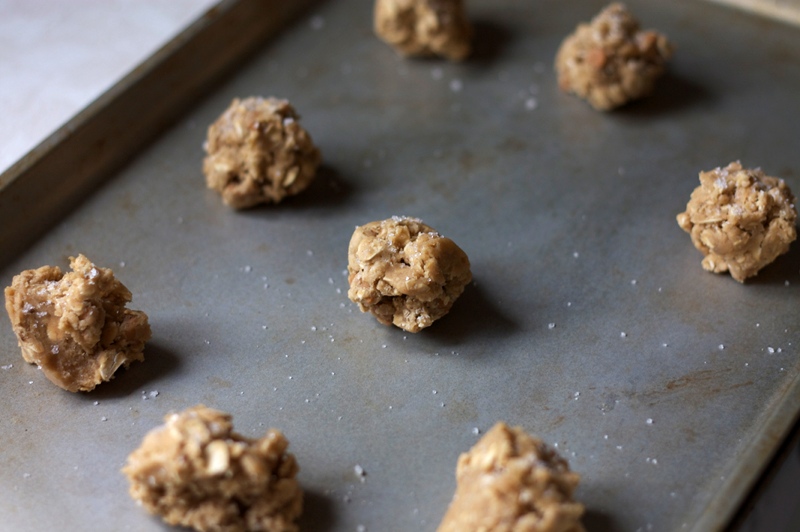
Drop by rounded tablespoon onto prepared baking sheets. Sprinkle cookies with fleur de sel.
Bake for 7 to 8 minutes for chewy cookies or 9 to 10 minutes for crisp cookies. Cool for a couple minutes on baking sheets; remove to wire racks to cool completely. Store in an airtight container.
Note: okay, now that I type this out, I realize that I didn’t just adjust the salt – all my instructions are different too. But it’s better this way!
banana-y banana bread
June 9, 2010 § 23 Comments
My stepfather is an incredible cook. I don’t know what he does, but whenever I’m visiting, the most amazing plates of food come out of that kitchen. What I find especially impressive, though, isn’t the exotic meals I’ve never tried before, but when he turns out a classic dish that is somehow better than every other version I’ve had. He makes a romaine salad that I can’t stop eating – I just eat more and more, and it’s only lettuce! A man who can make lettuce addictive is someone I want to learn to cook from.
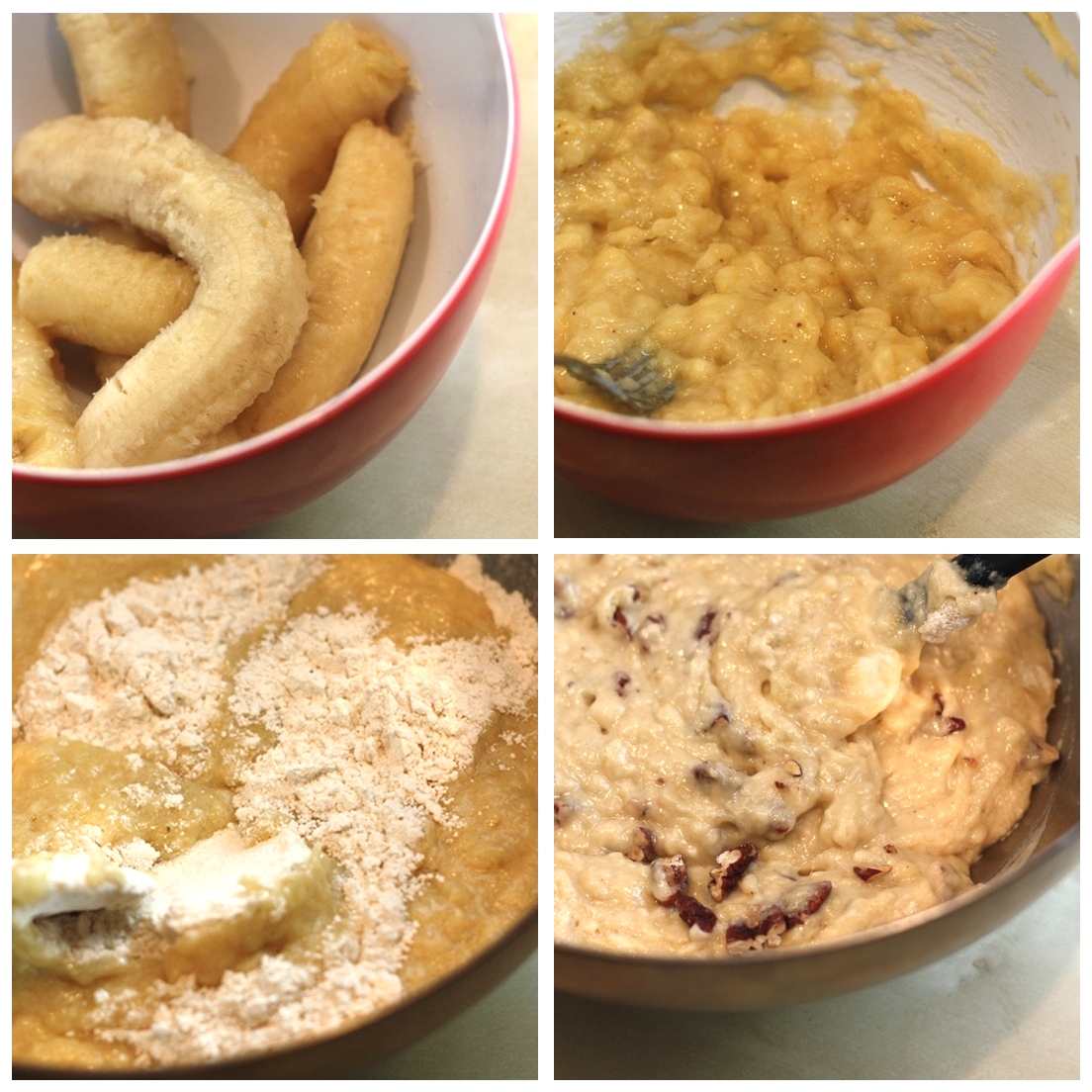
To that end, I always pay close attention when he doles out the occasional cooking tip. Apparently the secret to the salad is fancy sherry vinegar, and his chile-rubbed salmon is so amazing because he grinds his own chile powder blend. I’m ashamed to admit that I haven’t yet actually tried making these things, since they don’t contain butter or sugar, but I’ve scrounged some baking wisdom as well. When I mentioned that I was making banana bread, I got not one but two rules for banana bread, which I will now follow like scripture:
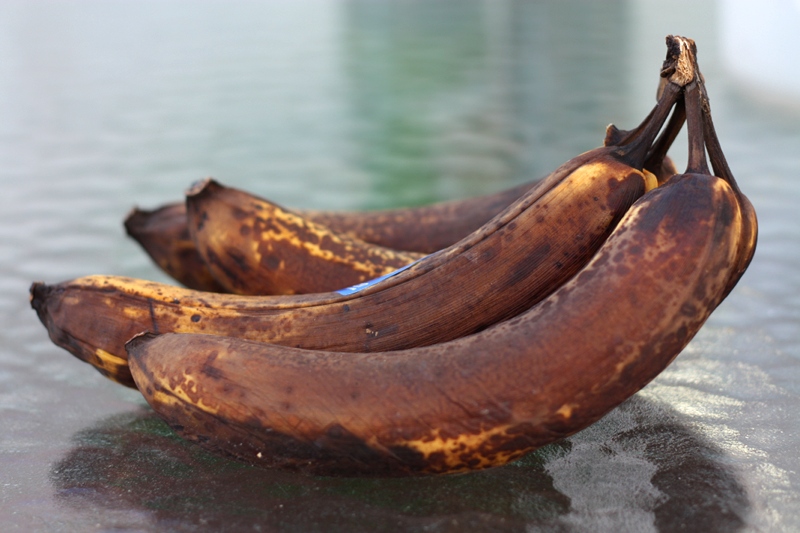
1. You have to use really ripe bananas. Sort of alarmingly overripe. Really, they should be brown enough that you’re kind of embarrassed if your friends happen to come over and spot them in your fruit bowl, because you know then they’ll think you’re a slob who keeps rotting fruit lying around the kitchen. But once you explain that it’s for purposes of banana bread, all will be forgiven!
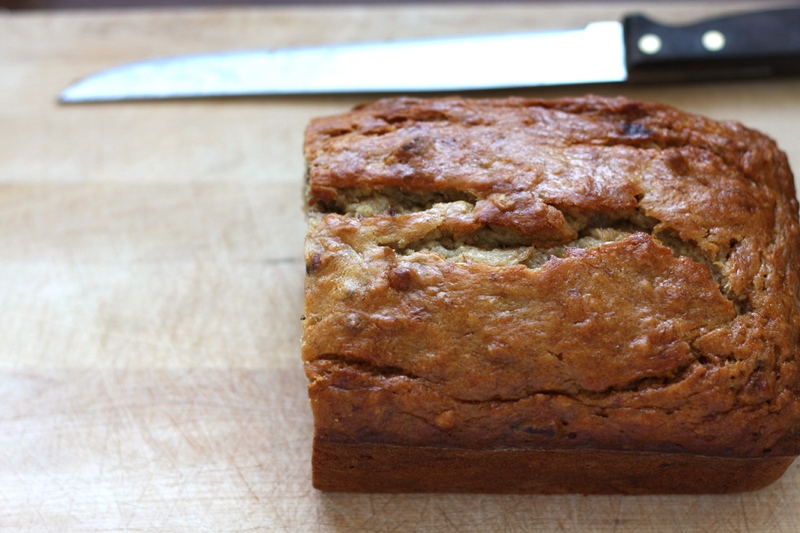
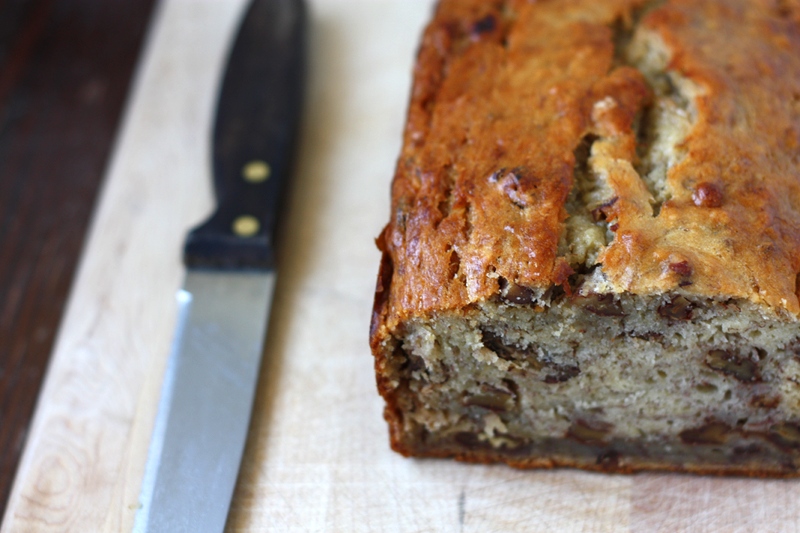
2. Add an extra banana to the recipe. I absolutely love this change, since it makes for a really banana-y, moist bread. If you prefer a cakier texture, though, then this might not be for you. Also, I’ve already added a banana to this recipe, so I suppose this rule no longer applies – although I’m curious to see how far it could be stretched…
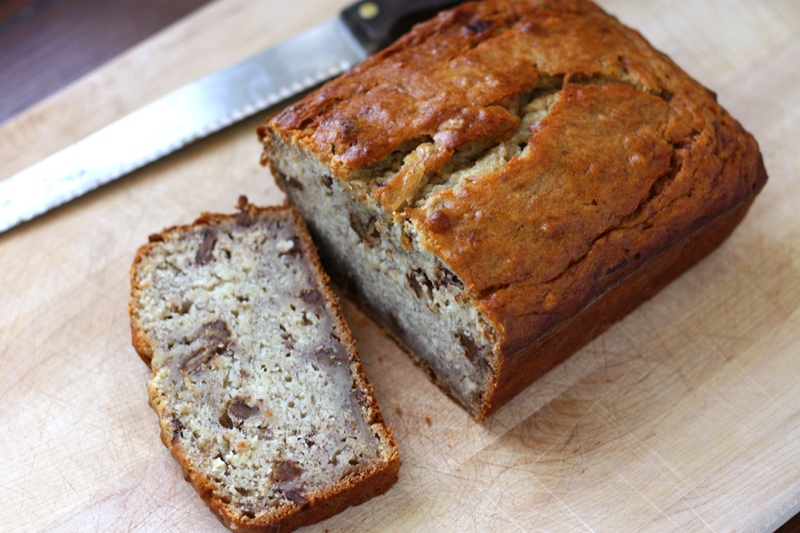
Extra Banana Bread – adapted from The New Best Recipe

This makes an ultra-moist, banana-y loaf, crunching with toasted nuts. If you prefer a cakier texture, drop the bananas back down to three, but I’ll be sad!
2 cups (10 ounces) flour, plus more for dusting the pan
1 cup walnuts, toasted and chopped coarse
3/4 cup (5 1/4 ounces) sugar
3/4 teaspoon baking soda
1/2 teaspoon salt
4 very ripe bananas, mashed well
1/4 cup plain yogurt (optional, I may try leaving this out next time)
2 large eggs, beaten lightly
1/2 cup (1 stick) unsalted butter, melted and cooled
1 teaspoon vanilla extract
Preheat oven to 350 degrees. Grease the bottom and sides of a 9 by 5-inch loaf pan; dust with flour, tapping out the excess.
In a large bowl, whisk together the flour, sugar, baking soda, and salt.
In a medium bowl, mix the mashed bananas, yogurt, eggs, butter, and vanilla with a wooden spoon. Lightly fold the banana mixture into the dry ingredients with a rubber spatula until just combined and the batter looks thick and chunky. Fold in walnuts as carefully as possible. Scrape the batter into the prepared loaf pan.
Bake until the loaf is golden brown and a toothpick inserted in the center comes out clean or with very few crumbs, about 55-70 minutes. Cool in the pan for 5 minutes, then transfer to a wire rack. Serve warm or at room temperature. (The bread can be wrapped with plastic wrap and stored at room temperature for up to 3 days).
white chocolate macadamia nut cookies
May 31, 2010 § 4 Comments
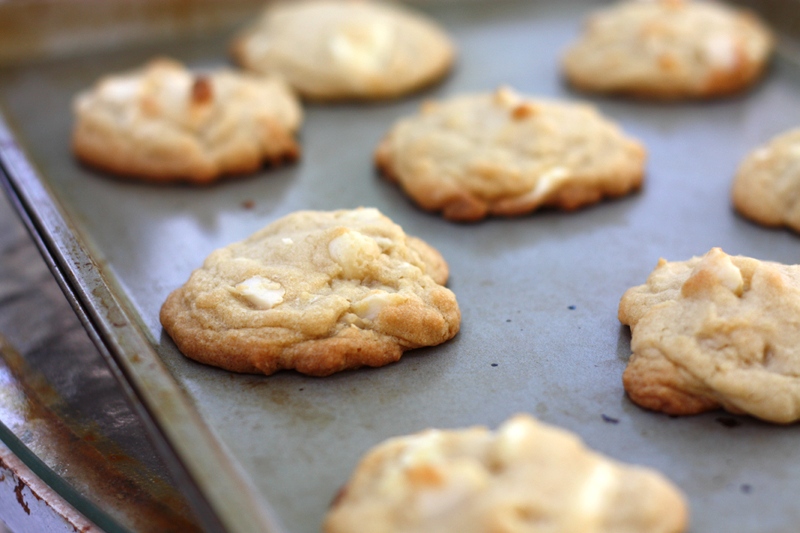
The weather here has become absolutely gorgeous, sunny and blazingly hot. The only downside is that turning on the oven now seems like an advanced form of torture, so my weekend baking plans have all been abandoned. These cookies predate the sudden onset of summer though, back to a near forgotten time when I would huddle near my stove for warmth and dream of moving to California, land of eternal sunshine and ripe avocados. At least that’s how I imagine it – I’m visiting San Diego in the fall and am firmly expecting avocados on every corner.
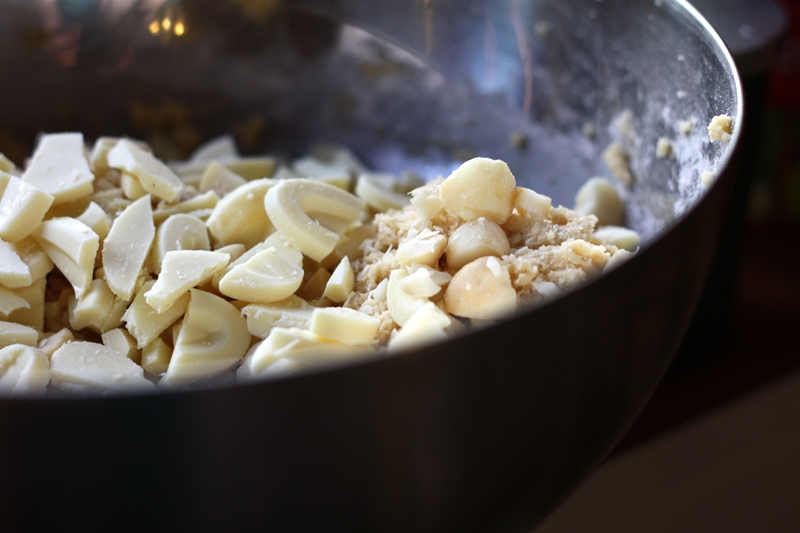
I made these a couple weeks ago, when a friend requested his favourite cookie. White chocolate macadamia nut cookies are a classic bakery item, but surprisingly none of my cookbooks had a recipe for it, so I scoured the internet. It took me literally a day to decide which recipe to use (they’re all so different! what if I pick a bad one?), but finally settled on this recipe, which is much like the classic chocolate chip cookie, but with different mix-ins. These cookies are soft and chewy and have a great balance of salty and sweet. Two important points: make sure you use real white chocolate (it’s probably best to chop up a bar), and use roasted and salted nuts. Then you too can experience the salty sweet perfection! And if it’s too hot out to bake, just eat the dough. It’s pretty good too.
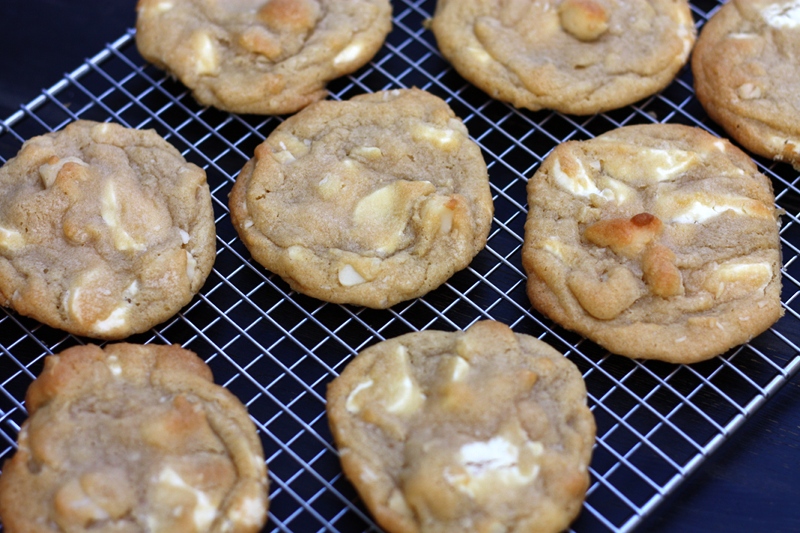
White Chocolate Chip Macadamia Nut Cookies – adapted from Whipped
Yield: about 3 dozen cookies.
-
1 cup butter, softened
1 cup granulated sugar
3/4 cup light brown sugar, packed
2 teaspoons vanilla
1/2 teaspoon salt
2 eggs
2 1/2 cups all purpose flour
1 teaspoons baking soda
10 ounces white chocolate, roughly chopped
1 cup macadamia nuts, toasted and salted, chopped into chunks
Preheat oven to 375 F.
In large bowl, beat butter, granulated sugar, and brown sugar with electric mixer until creamy. Add eggs and vanilla, beat well.
In a medium bowl, stir together flour, baking soda, and salt. Gradually add dry ingredients to butter mixture, beating until well blended. Stir in white chocolate chips and macadamia nuts.
Drop spoonfuls of dough onto an ungreased cookie sheet. Bake 8 to 10 minutes or until edges are golden brown, and centre is set. Let cool slightly, then transfer to a wire rack to cool completely.
piñata pavlova
May 25, 2010 § 6 Comments
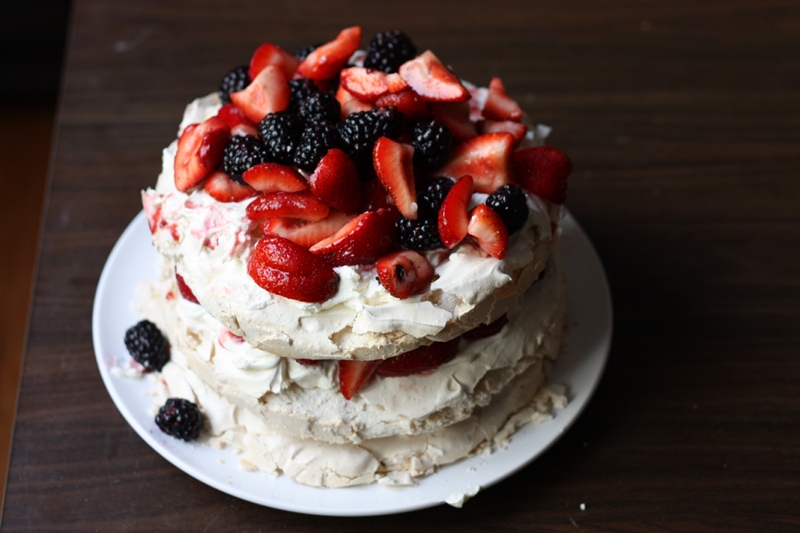
There are some recipes that just make me nervous. Yeasted doughs, anything involving caramel, and in particular: meringue. It’s even worse when I have a crowd to bake for, who can judge me for my failures. This anxiety may demonstrate that I in fact lead a quite sheltered life, in which the scariest event is baking. But it’s serious stuff! So why did I decide to make pavlova just as people congregated at my house for a barbecue? I have no idea, and somehow it worked out perfectly.
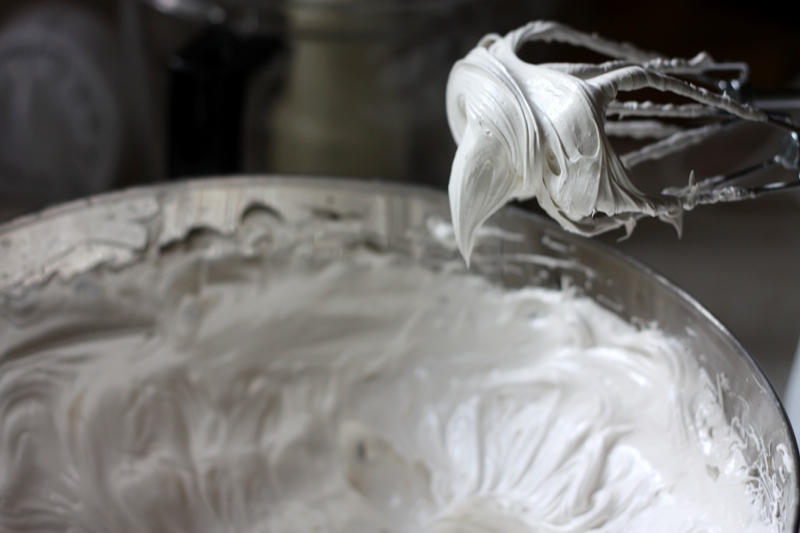
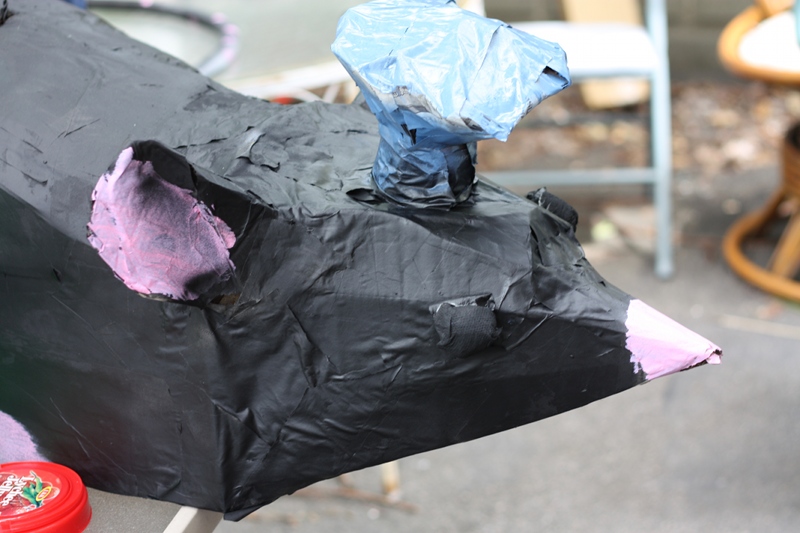
My incredibly talented friends constructed a piñata (seriously!) and we grilled en masse in the backyard. I ducked out partway through to assemble the dessert – you can make most of this ahead of time, but it doesn’t hold up long once it’s all put together. My heartstopping moments came mostly as I was making the meringue, and the peaks most obstinately refused to stiffen. It did get properly glossy though, so eventually I just shoved it in the oven and hoped for the best.
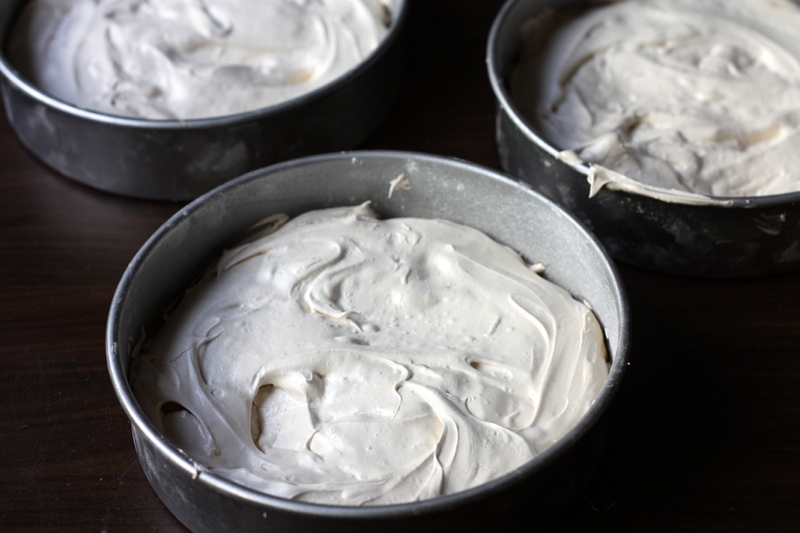
The pavlova turned out beautifully: it was crisp, melted in your mouth, and somehow didn’t break when I turned it out of the pan. Three layers are stacked with whipped cream and macerated berries, making for a gorgeous dessert. The pavlova is also flavoured with brown sugar, which gives it more depth than the typical recipe. My only minor complaint is that I think I don’t actually love pavlova. It’s all about sugar and not a trace of butter, which is the opposite of what I normally go for. But this recipe really is perfect, so if you’re a meringue-lover, make it!
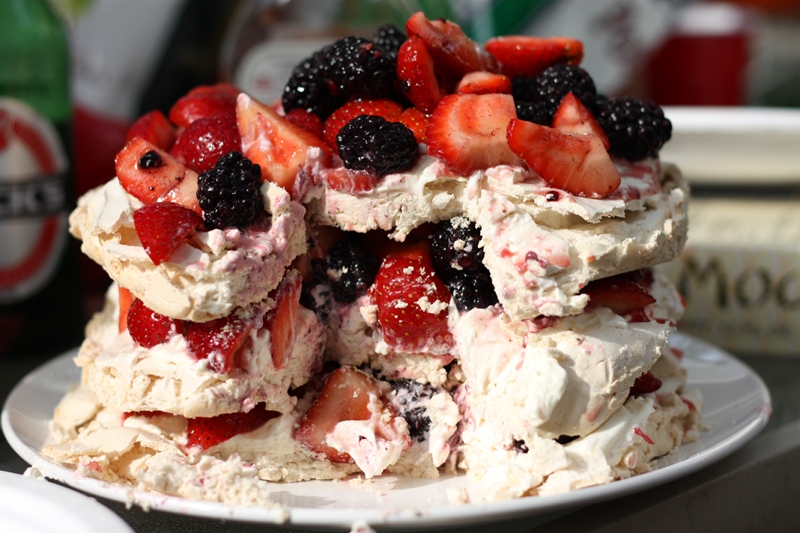
Triple-layer Brown Sugar Pavlova – adapted from Gourmet
Note: The meringue takes 2 hours in the oven, so it’s not a last-minute dessert. But it can be made ahead that day, or frozen up to a month earlier.
For meringue:
-
Confectioners sugar for dusting
1 cup superfine granulated sugar – I substituted 1 cup granulated sugar, whizzed in the food processor for 15 seconds.
1/2 cup packed light brown sugar
1 1/2 tablespoons cornstarch
1 1/2 teaspoons pure vanilla extract
2 teaspoon distilled white vinegar
3/4 cup egg whites (from 5 to 6 large eggs), at room temperature 30 minutes
Pinch salt
For berries:
-
1 1/2 pounds strawberries, trimmed and quartered
1 pound blackberries
2 tablespoons granulated sugar
For cream:
-
1 cup chilled heavy cream
1/3 cup chilled sour cream
Make meringue:
Preheat oven to 275°F. Lightly butter 3 (8-inch) round cake pans, then dust sides of pans with confectioners sugar, knocking out excess. Line bottom of each pan with a round of parchment paper.
Pulse superfine sugar (or pre-processed regular sugar), brown sugar, and cornstarch in a food processor until well combined.
Stir together vanilla and vinegar in a small bowl.
Beat egg whites with a pinch of salt using an electric mixer at medium speed until they hold soft peaks. Increase speed to medium-high and add sugar mixture 1 tablespoon at a time. After all sugar has been added, beat 1 minute more. Add vinegar mixture, then beat at high speed until meringue is glossy and holds stiff peaks, about 5 minutes. (My meringue got glossy but the peaks never quite made it to stiff – it still turned out great.) Spoon meringue into pans (about 2 1/2 cups per pan) and smooth tops.
Bake until meringues have a crisp crust and feel dry to the touch, about 1 hour (insides will still be marshmallow-like).
Turn oven off and prop door open slightly with a wooden spoon. Cool meringues in oven 1 hour. (Meringues may sink slightly and crack while cooling.)
Run knife along sides of cake pans and very carefully turn meringues out of pans. Carefully peel off parchment (meringues will be fragile and the crust may crack further). Carefully turn right side up.
Macerate berries:
While meringues cool, toss berries with sugar and let stand at room temperature until ready to use (up to 1 hour).
Assembly:
When ready to assemble dessert, beat heavy cream with sour cream using an electric mixer until it just holds soft peaks. Put 1 meringue on a serving plate and spread one third of whipped cream over it. Spoon one third of fruit (with juice) over top. Repeat with remaining meringues, cream, and fruit.
Note: If you want to make your meringues ahead of time and freeze them, wrap them individually and freeze for up to a month. Thaw at room temperature, still wrapped, for at least 2 hours.
p.s. here is our beautiful piñata. It’s a mouse! With a hat, of course.
rainbow chard
April 18, 2010 § 5 Comments
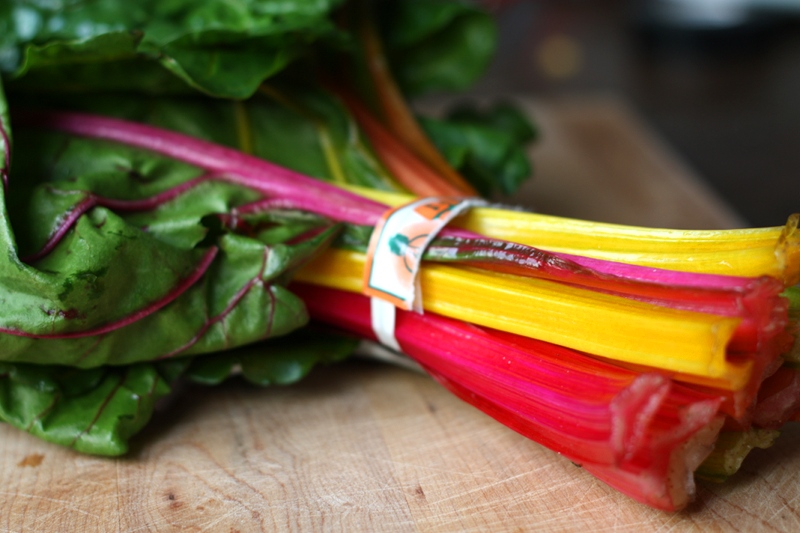
I think the only reason I haven’t died of scurvy yet is the weekly produce market across the street from my office. It’s tempting to just eat cookies all day long, and the produce at the grocery store doesn’t make a compelling case for itself, but this market is a different story. There’s just a couple rows and the variety is limited, but everything is fresh and good and I always end up buying more than I can eat.
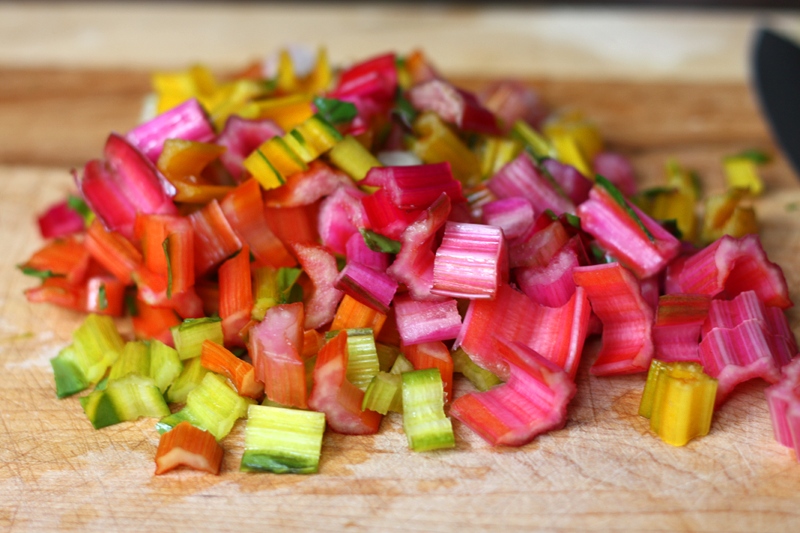
This recipe is from a few weeks ago, when I saw an irresistible bunch of rainbow chard. I’ve never seen such a gorgeous vegetable! I talked it up to everyone, although for some reason no one quite shared my enthusiasm for brightly coloured food. The vivid colours didn’t disappoint, though, as this also turned into an incredibly easy and very tasty vegetable dish. I braised the stems and leaves, along with sautéed onions and golden raisins, then sprinkled with toasted pine nuts. It’s a fantastic side dish that’s both delicious and healthy, which is rare for me, and the contrast of textures and sweetness of the raisins makes it a little more interesting than most preparations of chard, which I find can be a bit too virtuous. Sadly the startling colours didn’t persist in the final dish, but I ate it anyhow. And it was good.
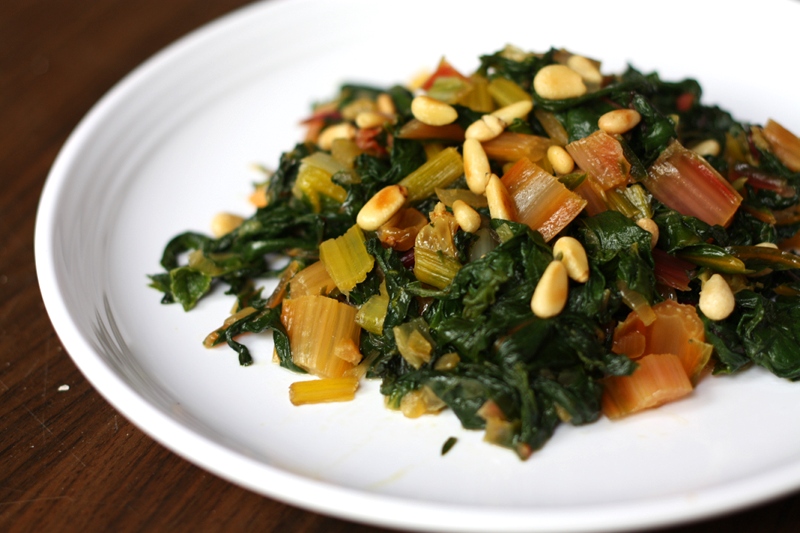
Swiss Chard with Raisins and Pine Nuts – adapted from Epicurious
- 1 1/2 pounds Swiss chard (preferably rainbow or red; from 2 bunches)
- 2-3 tablespoons olive oil
- 1 medium onion, finely chopped
- 1/3 cup golden raisins
- 1 cup water
- 1/2 cup pine nuts, toasted
Tear chard leaves from stems, then coarsely chop stems and leaves separately.
Heat oil in a heavy pot over medium heat, and then sauté onion, stirring occasionally, 1 minute. Add chard stems and cook, stirring occasionally, 2 minutes. Add raisins and 1/2 cup water and simmer, covered, until stems are softened, about 3 minutes. Add chard leaves and remaining 1/2 cup water and simmer, partially covered, stirring occasionally, until leaves are tender, about 3 minutes. Season with salt and pepper.
Serve sprinkled with nuts.
 one cake two cake